

Homeschooling Methods & Styles: Find the Right Approach for Your Family
As an Amazon Associate I earn from qualifying purchases.
New homeschooling parents can often get overwhelmed by homeschooling methods and styles. When I first started homeschooling, I was so excited to get started. Then someone asked me which method I was going to follow. My brain went blank. I didn’t know I had to subscribe to a certain method before starting!
While methods aren’t one-size-fits-all, I’ve found it does help to know what type of homeschool you’d like to cultivate. In this post, I’ll help you compare the nine most common homeschool styles by structure, parent involvement, daily routine, and cost. You don’t have to choose one perfect method to begin. In fact, many homeschooling families find they use a combination of methods. Keep reading to find your homeschool culture without buying a mountain of curriculum.

Disclaimer: This article may contain commission, paid partnerships, or affiliate links. We independently review everything we recommend. When you buy through our links, we may earn a commission from qualifying purchases.
What Are Homeschooling Methods?
Homeschooling methods are the different approaches families use to educate their children at home, each shaped by a philosophy about how kids learn best. Common examples include traditional, Classical, Charlotte Mason, Montessori, and unschooling. A method is your overall approach and values, while curriculum is simply the set of tools you use to teach.
Many of these types of homeschooling are based on philosophies from great thinkers and teachers, and those guardrails shape your curriculum, your extracurriculars, and even how your children learn at home. Your method is so much bigger than your curriculum, and no method works perfectly for every child and every season.
When I started homeschooling, my heart was drawn to the Charlotte Mason method, which I still adore. But parts of that method didn’t fit our lifestyle and my children’s personalities. So, I took the things that did work for us, like living books and nature studies, and adjusted them to my specific season. I recommend you do the same! Homeschooling is much more enjoyable when you feel like you’re going with your family’s natural flow.
Homeschooling Methods at a Glance (Comparison Table)
Yes, you can really homeschool! This comparison table gives you a quick overview of the different types of homeschooling. Chances are, one of these methods (or a few!) will pique your interest. One note: I estimated the typical cost as best I could, but most homeschooling methods can be adjusted to almost any budget.
| Method | Best For | Parent Involvement | Structure Level | Typical Cost |
|---|---|---|---|---|
| Traditional (School-at-Home) | Families wanting a familiar schooling routine | Moderate to High | High | Moderate to High |
| Classical | Families who enjoy history, art, literature, and structured learning | High | High | Low to High |
| Charlotte Mason | Families who love good books, nature, and short lessons | Moderate to High | Moderate | Low to Moderate |
| Montessori | Families who want to raise independent learners | Moderate | Moderate | Low to High |
| Waldorf | Families who value creativity, art, and imagination | High | Moderate | Low to High |
| Unit Studies | Families teaching multiple ages or who value family connection | Moderate to High | Flexible | Low to Moderate |
| Unschooling | Families who want a flexible homeschool and self-directed children | Moderate, but Flexible | Low | Low to Moderate |
| Eclectic Homeschooling | Families who want to combine approaches | Varies | Flexible | Varies |
| Online & Virtual Homeschool | Families who want lessons planned and taught for them | Low to Moderate | High | Free to High |
The Most Popular Homeschooling Methods and Styles

This article can’t cover every homeschooling philosophy out there, but I wanted to give you an in-depth look at the most popular. These are the top buzzwords you’ll hear in any homeschool circle, and they’ve stood the test of time. For each one, you’ll get a glimpse into what your homeschool day could look like, plus the pros, cons, and a budget tip.
Traditional (School-at-Home)
True to its name, traditional homeschooling most closely resembles a classroom. You’ll use textbooks or even a cohesive boxed curriculum, teach separate subjects with scheduled lessons, and most likely introduce your child to quizzes and tests.
A typical morning might include scheduled blocks for math, language arts, science, and history, with the flexibility to do school at a time that works best for your family. School-at-home is wonderful for parents who like predictable routines and clear instructions, however, the downside is that recreating school at home can feel rigid for free-spirited homeschool families.
You can keep traditional homeschooling budget-friendly by buying used curriculum, reusing non-consumable materials, and sampling boxed curriculum before buying a full set. Most companies let you download a sample lesson or two before committing, or you can usually get one by emailing them.
Classical
Classical education is built on the trivium, which has three stages: grammar, logic, and rhetoric. In the grammar stage, roughly 1st through 4th graders focus on basic skills like memorization, facts, and vocabulary. The logic stage usually covers 5th through 8th graders, who begin making connections, reasoning, and evaluating ideas. The last stage is the rhetoric stage, where 9th through 12th graders learn to communicate ideas through writing, discussions, and presentations.
A typical day as a classical homeschooler includes memory work, chronological history, Latin, and formal writing, because this method gives students a strong framework to build on and encourages critical thinking. It does require planning and a lot of parent involvement, though, and it may feel too intense for families who want a more relaxed culture.
Parents on a budget can make classical education frugal by using library books and public-domain classics, plus timelines and memory sheets found online. If you’re interested in this method, or in borrowing even a portion of it for your homeschool, check out The Well-Trained Mind by Susan Wise Bauer.
Charlotte Mason
Charlotte Mason was a British educator who lived from 1842 to 1923. She believed children are born persons who deserve to be treated (and taught) with respect. Charlotte used nature study, narration, art and music appreciation, short lessons, and habit training to create a well-rounded education. She also wasn’t a fan of dry textbooks and instead used “living” books written by authors who genuinely loved their topic.
A morning in a Charlotte Mason homeschool might include devotions or a character-training session, read-alouds followed by narration (your child tells back what they heard), copywork to improve handwriting, and time spent nature journaling. Charlotte Mason is a treat for homeschool parents who love literature and the outdoors, and it works well across multiple ages.
The caveat is that you’ll likely spend a lot of time finding quality literature and planning nature studies. However, this method can be extremely cost-effective, especially if you build your lessons around library books, free art displays and museums, and nature walks like this simple nature scavenger hunt.
Montessori
The Montessori method was created by Maria Montessori, an Italian physician and educator. She believed in letting children practice real-life skills, build independence, and learn in a carefully prepared, beautiful environment. A day for a young Montessori student might involve pouring beans into a cup, counting objects, and making a simple snack.
While Montessori is most popular for toddlers and preschoolers, its ideas can extend through elementary school. This method encourages children to be independent and gives them plenty of time to use their hands. The most common cons are that creating a beautiful learning environment takes a lot of effort, and many Montessori toys are expensive. However, you can do Montessori on a budget by thrifting items, using simple manipulatives, and making do with what you have around the house.
Waldorf
Rudolf Steiner founded Waldorf education, which values imagination, art and movement, limited technology, delayed formal academics, and living in rhythm with the seasons. Waldorf is a creative, gentle method for families who adore a touch of whimsy.
A morning in a Waldorf homeschool might look like reading an imaginative story, painting what you see out the window, baking a treat with in-season fruit, and working on your current handicraft. Homeschool parents love the Waldorf method because it builds routines naturally into family life, but many find that delaying formal academics until around age 6 or 7 doesn’t fit their child.
Budget-conscious Waldorf parents can use natural household supplies, library books, secondhand art materials, and simple seasonal activities to cut costs.
Unit Studies
Unit studies teach several subjects through one topic. This can be a fabulous way to entice a reluctant learner or take a deep dive into something you’re passionate about. For example, a day using an apple unit study could involve cutting an apple into quarters to learn fractions, examining the parts of an apple for science, drawing an apple for art, and writing a story about an apple for language arts.
This approach works well for parents homeschooling several ages who don’t want to spend all day around the table. It’s engaging, flexible, and creates natural connections between subjects. Parents can purchase a unit study or, if they have the bandwidth, create their own, though some find it challenging to come up with activities for every subject.
You can find unit studies online at a reasonable price, but to save money, choose a free unit study, like our ever-popular Johnny Appleseed unit study.
Unschooling
John Holt coined the term unschooling in the 1970s, but parents followed this philosophy long before that. Unschooling is possibly the most controversial method, since it’s led by the child’s interests and doesn’t use a fixed daily curriculum. However, unschooling doesn’t mean the child’s education is ignored.
A day in the life of an unschooler might involve learning measurements by cooking a favorite snack, playing an educational board game, watching an intriguing documentary, and reading a book of the student’s choice. When done intentionally, unschooling can give your child independence and a love of shaping their own learning path. However, it requires much more careful tracking than a preset curriculum, especially because your state’s homeschool laws still apply.
Unschooling can be the most budget-friendly option, especially if you take advantage of free community events, household projects, parks, and libraries.
Eclectic Homeschooling
Eclectic homeschooling families intentionally combine the parts of various homeschool methods that work best for them. For example, an eclectic student’s day may involve a traditional math curriculum, living books for literature, a science unit study alongside siblings, and memorizing Latin verbs. This method is flexible, customizable, and can meet a variety of needs.
Eclectic homeschooling can get expensive if you use too many different resources. I recommend choosing one reliable resource, like a solid math and language arts curriculum, then adding lighter elements from other philosophies, such as Charlotte Mason nature walks.
Online and Virtual Homeschool
Families who want their child to learn at home but have limited bandwidth often love online and virtual homeschool. You can do this in a variety of ways. Many states offer programs where students do public school at home, and there are also private online schools and online homeschool curricula.
An online or virtual homeschool student’s day often looks like watching videos or lectures on a computer, meeting deadlines, and sometimes meeting with a teacher. This is a great option for families who need structure and want lessons taught or planned for them. It’s also a popular choice for work-at-home parents.
The main downside is that online or virtual homeschooling involves more screen time than some parents are comfortable with, and it can be inflexible. It can be adjusted to almost any budget, though, and many programs (like ones run through the public school system) are free.
How to Choose the Right Homeschooling Method for Your Family
At this point, you’re probably wondering which homeschool method is best. The best method is the one that fits your lifestyle, values, time, budget, and, most importantly, your child. Use the quick self-check questions below to narrow it down.
Consider Your Child
Taking your child’s preferences into consideration creates a much more peaceful homeschool. Does your student prefer hands-on work or books? Do they focus best with flexibility or a strict routine? Can they work independently? What keeps them engaged and curious? Your child’s learning style matters here too, but treat it as one piece of the puzzle rather than the deciding factor.
Consider Your Time, Budget, and Season of Life
Your homeschooling method should match your current season of life. Sometimes, this means laying down some ideals or not following them as strictly as you’d like. How much time can you realistically spend preparing lessons and your learning space? Are you teaching one child or several? Do you work from home or outside the home? How much can you comfortably spend?
Consider Your Teaching Style and Values
I am a much happier homeschool mom when I consider my own teaching style and values. Your homeschool should include elements that you love! Do you work best with clear instructions or the freedom to go with the flow? Do you enjoy crafting, reading aloud, and going outdoors? What do you want your homeschool days to feel like?
Can You Mix Homeschooling Methods?
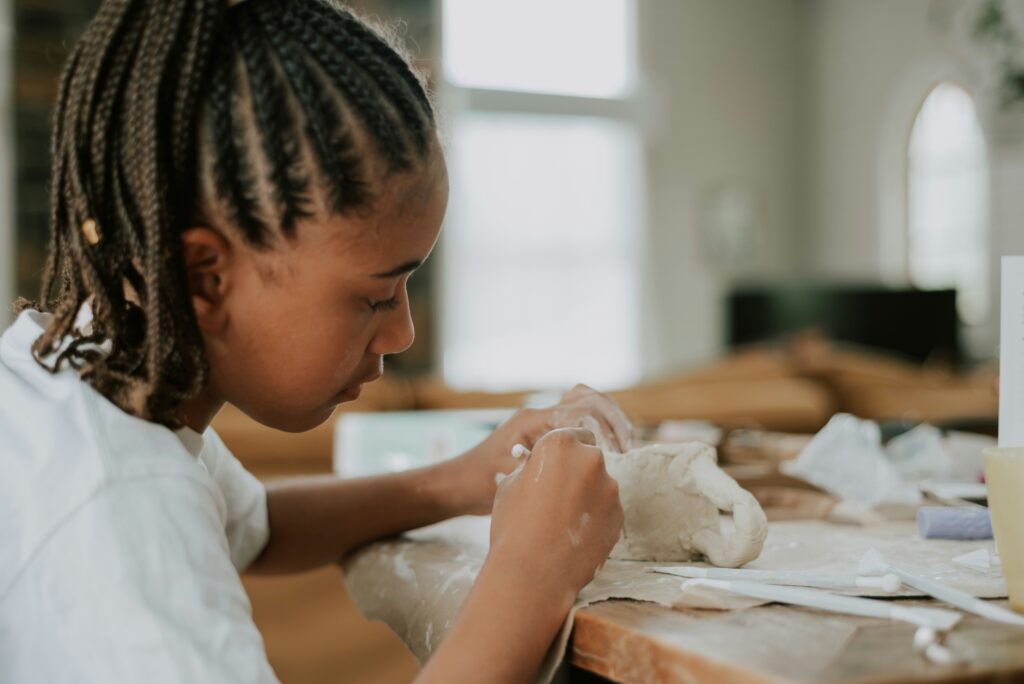
You can absolutely mix homeschooling methods. This is called eclectic homeschooling, and it’s popular with parents who want to take the best elements of a few methods and make them their own. I recommend starting with one primary framework, such as traditional homeschooling, then adding what appeals to you. For example, you can combine traditional math books with a Waldorf-style art lesson and Charlotte Mason-inspired living books.
Remember, methods are tools, not rules. Ultimately, your homeschool culture should be something you’re proud of and can stick with.
How to Homeschool on a Budget with Any Method
Don’t let your budget stop you from pursuing the homeschool of your dreams. It’s easy to get overwhelmed by how much homeschooling costs. But there are a slew of free resources, starting with your local library. Besides books, many libraries offer DVDs, art prints to check out, audiobooks, eBooks, and free classes.
You can buy used curriculum online or at your local homeschool curriculum sale, then sell it when you’re finished to give your homeschool budget more wiggle room. Reusable materials work well when homeschooling multiple ages, and free printables can fill in the gaps. Unit studies are another budget win, since one topic covers several subjects at once.
For more budget-friendly ideas, check out our top homeschool resources under $20 and our best tips for making homeschooling affordable.
Homeschooling Methods FAQs
There’s no official national count of which homeschool styles families use, but eclectic homeschooling is widely considered the most common. Most parents find that a combination of homeschooling methods works best for their families, especially as kids grow and needs change. Traditional homeschooling with a boxed curriculum is also popular with parents who want extra support and a clear plan.
Charlotte Mason vs. Classical can seem like a close call, and in many ways the two are similar! Both focus on great books, thoughtful discussion, character formation, and history. The difference is in the delivery: Classical follows the structured grammar, logic, and rhetoric stages with memory work and often Latin, while Charlotte Mason keeps lessons short for young children and relies on narration instead of tests.
You can combine elements of both into a beautiful homeschooling philosophy. Which one you lean toward will depend on your children’s personalities and your own bandwidth.
You don’t have to have it all figured out to start homeschooling! If you’re new to this world, a traditional boxed curriculum will give you a clear starting point, daily instructions, and extra support. However, if you’re a natural-born teacher, you may find Charlotte Mason’s gentle approach is the perfect way to ease into schooling at home. Experiment and see which works best for your family. If you’d like more guidance, check out our free workshop on planning your first homeschool week, which includes a printable guide and expert advice.
You can absolutely switch or tweak your homeschooling methods mid-year. Many parents find that a regular check-in, such as at the end of each term or after a holiday break, helps their homeschool run smoothly. I recommend changing one troublesome area at a time instead of overhauling everything at once. That can get costly!
Eclectic homeschooling blends different philosophies and methods into one plan that fits your family. Some homeschool families don’t fit in one box, and that’s okay! When deciding whether homeschooling is right for your family, the freedom to homeschool eclectically may help you feel more confident. One tip if you go this route: keep a simple record of what you cover in each subject, so mixing resources doesn’t leave gaps.
Finding Your Own Homeschool Style
You don’t have to identify as a “Classical” or “Waldorf” family to begin homeschooling. Select one approach that speaks to you, try it out, and tweak things as necessary. Families often find that removing the pressure to fit a certain mold makes the experience a lot more enjoyable. Remember, changing course is part of homeschooling, not proof you’ve failed the mission.
If you’re ready to take the next step, check out our post on how to get started homeschooling, with tips sure to encourage you! And I’d love to hear from you in the comments: which homeschooling method are you drawn to, or which mix is working for your family right now?