

Goal Setting for Elementary Students: SMART Goals, Examples & a Free Printable
As an Amazon Associate I earn from qualifying purchases.
Most adults are no stranger to dreaming big, but goal setting for elementary students can be harder to navigate. In my own homeschool, I’ve noticed that my students need a bit of guidance in this area, or they set goals that are too broad or vague. Without clear guidelines, goals are abandoned within days! This is where SMART goals for kids come in.
In this article, I’ll share the guidelines I used to help my kids create their own attainable goals, examples of realistic goals for each age group, tips for tracking progress, and fun goal setting activities. You’ll also get my free goal setting printable to help your students brainstorm goals they’ll actually reach. New Year goal setting is the most common place to start, but you can also start at the beginning of a new month, semester, or quarter.

Disclaimer: This article may contain commission, paid partnerships, or affiliate links. We independently review everything we recommend. When you buy through our links, we may earn a commission from qualifying purchases.
Why Goal Setting Matters for Elementary Students
Elementary students need to know they can do great things. Goal setting helps them soar to new heights and challenge themselves. When children set goals (especially on their own), it gives them independence and confidence as they work toward something that matters to them. It also gives them a chance to take ownership of their learning.
Homeschooling is a great environment for goal setting because Mom and Dad are right there to guide them. If your student gets stuck, you can help them choose goals that fit their personality. One-on-one goal check-ins fit naturally into homeschool life, and you can adjust the goals at any time instead of waiting for a specific grading period. If you’re still planning your first week of homeschooling, a short goal setting session is an easy thing to add to it.
Help your children go into goal setting with Carol Dweck’s growth mindset principles: missed goals do not equal failure, intelligence and talent can be cultivated over time, and goals are a continuous process. Whenever you can, focus on learning goals instead of performance goals. For example, learning the 6 times tables is a learning goal, while getting 100% on a math test is a performance goal. This grace-driven mindset will keep goal setting fun for the entire family.
What Is a SMART Goal? (Explained for Kids)
SMART is a simple checklist that helps students gauge whether their goals are actually reachable. Here’s a quick reference to help you break it down.
| Letter | Meaning | Kid-Friendly Explanation | Question to Ask |
|---|---|---|---|
| S | Specific | My goal shows exactly what I want to do. | What exactly do I want to do? |
| M | Measurable | I know when I’ve completed my goal. | How will I track my progress? |
| A | Achievable | It is challenging, but possible. | Can I do this with the time and help I have? |
| R | Relevant | This goal matters to me right now. | Why does this matter to me? |
| T | Time-Bound | I have a finish date. | When will I complete it? |
SMART goals for kids should stretch them without discouraging them. Younger elementary students do best with goals that last several days, while older elementary students can handle goals that span a few weeks. Read each letter of the SMART acronym with your students, but remember they don’t have to have the entire table memorized to get started!
How to Teach Goal Setting to Elementary Students
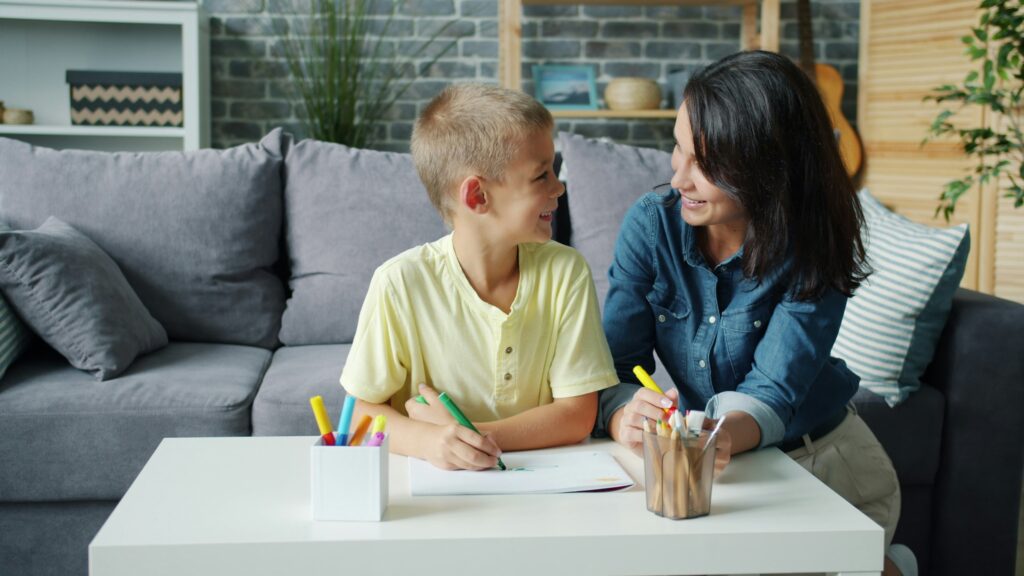
Goal setting for elementary students works best when kids choose one SMART goal (specific, measurable, achievable, relevant, and time-bound), break it into small action steps, and track progress on a simple chart. For example, “get better at math” becomes “I will practice my 6 times tables with flashcards for five minutes a day this month.”
When I first started teaching my children to set goals, I totally took over. I evaluated the areas of their lives that needed improvement and, admittedly, was a bit bossy. After my children quickly lost motivation, I learned that my place was to guide their goal setting process, not control it. Here are some ways you can support your elementary students as they reach for the stars.
Step 1: Talk About What a Goal Is
A great definition of a goal is this: A goal is something you want to learn, improve, complete, or practice. It’s different from a wish because a goal has a plan to help you get where you want to go! Goals often take practice and hard work, but they’re rewarding because you can see the progress you’ve made. Ask your child about a time that practice got them closer to something they really wanted.
Step 2: Brainstorm Big Dreams, Then Make Them Small
Encourage your child to dream big, then break that dream down into something they can achieve in the near future. Small steps help them accomplish their goals sooner and not get discouraged in the process.
For example, you can break down writing a book into writing and illustrating one chapter each week. Try not to shoot down their ideas! This is a great way to glimpse into the heart of your student.
Step 3: Turn It into a SMART Goal
Use the free goal setting printable to walk through the five SMART questions together. Let your child choose the completion date. Be sure to note whether your child’s goal relies mostly on them or whether they’ll need support from you. Now is the time to gently coach your student if you notice that their goal seems unattainable or focuses on things outside of their control, like someone else’s behavior.
Step 4: Make an Action Plan
Ask your child, “What steps would help you reach your goal?” Then, choose 2 to 4 action steps. For example, if their goal is to learn their 6 times tables, an action plan would be to practice flashcards for 5 minutes a day and have a parent quiz them each Friday. Add the action plan to the printable for easy reference.
Step 5: Track Progress and Check In
Visual trackers are the perfect way for kids to see what progress they’ve made. There are plenty of options to fit your budget and bandwidth. Create a sticker chart, or simply use checkboxes or color in squares. It doesn’t have to be fancy to be effective!
A weekly check-in fits naturally into homeschool time and helps you figure out what went well, what didn’t, and what needs fixing. I’ve found that short, supportive conversations work best!
Step 6: Celebrate and Reflect
I always take time to celebrate completed goals, but I also make it a point to celebrate progress. Persistence and learning opportunities are worth cueing the confetti for! Depending on my season, celebrations look like displaying progress charts, letting the kiddo choose our dessert, or a special library trip.
Examples of Goals for Elementary Students
Wondering what goals are realistic for elementary students? Here are some examples of goals for students that will inspire you. Your child is unique, so use this list to help brainstorm and adjust the goals based on your student’s interests and ability.
Academic Goals
- I will practice math flashcards for five minutes each day.
- I will learn five new spelling words each week.
- I will complete my handwriting page today using my neatest writing.
- I will watch a documentary about ocean animals by Friday and tell my mom one fact I learned.
- I will complete one kindergarten printable by the end of this week.
Reading Goals
- I will complete a summer reading challenge by the end of August.
- I will read aloud to my siblings twice this week.
- I will check out a library book in a new-to-me genre and finish it by the end of this month.
- I will write one sentence about each book I finish this month.
- I will learn 10 new sight words this month.
Character and Behavior Goals
- I will say one encouraging thing to my sister each day.
- I will practice waiting without interrupting today.
- I will put my toys away before starting a new activity.
- I will take 3 deep breaths when I get mad today.
Life Skills and Chore Goals
- I will make my bed every day for 2 weeks.
- I will feed the dog breakfast every day this week.
- I will learn to make scrambled eggs with an adult.
- I will organize one area of my room each day for the next five days.
- I will prepare my own snack three times this week.
Health and Activity Goals
- I will play outside for 20 minutes four times this week.
- I will drink water with my lunch every day this week.
- I will stretch outside for 5 minutes three times this week.
- I will choose one fruit and one vegetable at the grocery store on Friday.
- I will get ready for bed by 8:30 PM on school nights.
How to Turn a Vague Goal into a SMART Goal
Remember to make the goals SMART by keeping them specific, measurable, achievable, relevant, and time-bound. Here’s what that looks like with a health goal:
- Vague goal: “I want to be more active.”
- SMART goal: “I will play outside for 15 minutes before watching television four days this week.”
The SMART version tells your child exactly what to do, how often, and when they’re finished.
Goal Setting Examples by Grade

If you’re homeschooling multiple grades, customize the goals to fit each child. This might mean that your younger students’ goals won’t be perfectly SMART, and that’s okay! Here are some examples of grade-by-grade goal setting that have worked well for me.
Kindergarten and 1st Grade
Keep goals concrete and brief, because this age needs to focus on “quick wins” that will give them an instant sense of accomplishment. When my boys were young, sticker charts were their favorite way to see progress and have a mini reward each day! Choose just one goal that they can complete within a week or two, such as learning to write their name or tie their shoes.
2nd and 3rd Grade
Lower elementary students do best with goals that are short-term with measurable progress. At this age, students can choose their own action steps with just a little guidance from you. Examples of great goals for second and third grade include reading for 15 minutes on 4 days this week, choosing one printable to complete today, or writing in a journal three times in a week.
4th and 5th Grade
Upper elementary is a wonderful season to start introducing goals that span 2 to 4 weeks, as this helps your students naturally stretch themselves and lets you see their capabilities. Encourage your child to track their own progress and take ownership of troubleshooting.
Great goals for this age group include saving five dollars of their allowance this month, finishing two chapter books in two months, and learning one new song on the saxophone by the end of the month.
Goal Setting Activities for Kids
You can turn a goal setting session into an entire day’s lesson with a few fun goal setting activities for kids, however, choose activities that fit naturally into your homeschool day. Need inspiration? Try one of these ideas!
Vision Boards: I’m sure you have fond memories of creating collages from magazine photos. I used to spend hours doing that! Your children can brainstorm what they want their future to look like by doing the same thing. If you don’t have old magazines to snip from, kids can draw their aspirations. Vision boards are a great launching pad, but don’t feel tied to them!
Goal Ladders: A fun activity for 2nd through 5th graders, goal ladders involve writing your goal on the top “rung,” then adding action steps to each rung below that. Your students climb the ladder by completing one step at a time. I love this activity because it lets you visualize your action plan.
Goal Jar: Do you have a student who struggles to decide which goal they should pursue? Have them write their goal ideas on popsicle sticks or slips of paper and place them in a jar. They can draw two ideas and choose from those. Be sure to include fun goals alongside academic goals to keep things feeling fresh.
Progress Chain: Paper chains are perfect for younger kids who need a visual of how close they are to meeting their goal. Similar to counting down to Christmas, you create a chain with one loop for each time the child does something to meet their goal. This works particularly well for goals like learning ten new sight words in a month.
Free Goal Setting Printable for Kids
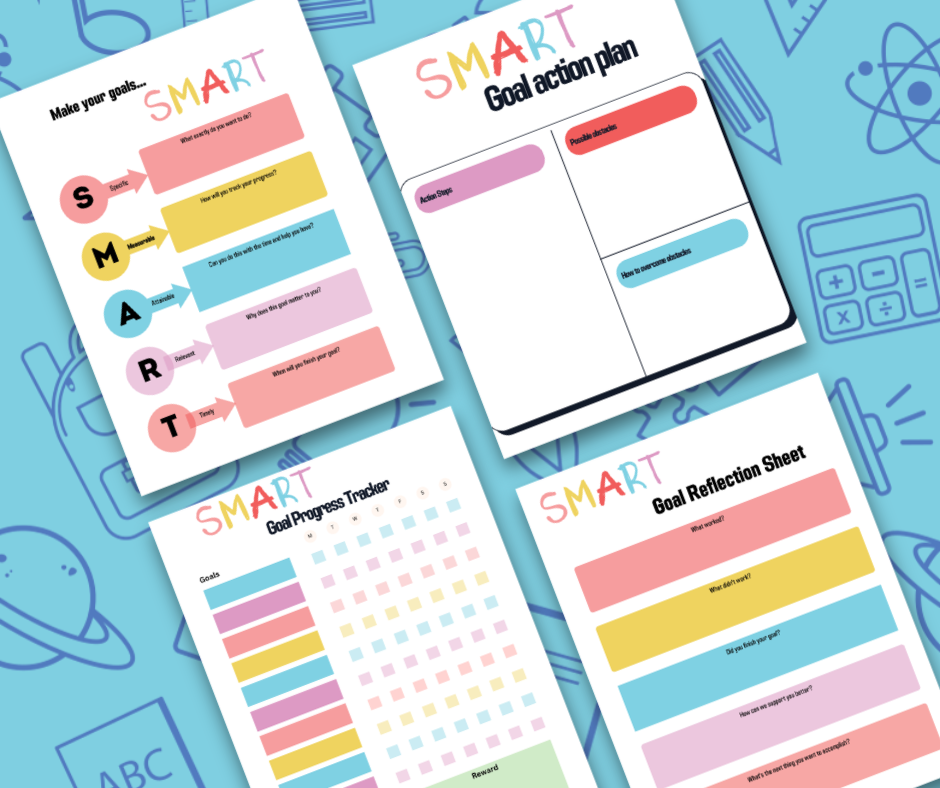
The free goal setting worksheet for kids helps you put what you’ve learned into practice. This kid-friendly SMART goal printable gives your students space to write or draw their goal, create an action plan, track progress, and reflect.
Younger children can simply draw pictures or have a parent help them, and older children should be able to complete the entire packet on their own. Enter your email below to have the free goal setting printable for kids delivered right to your inbox!
Tips for Helping Kids Stick to Their Goals
Your students are excited to get started, and the motivation is high! How do you help them stick to their goals when the shine wears off? Laying a strong foundation goes a long way. Start with just one goal, and let your child have a real say in what that goal is. Keep the timeline short (1 to 4 weeks is great for younger kids!), and create a way for them to track progress.
Be their biggest cheerleader, and make sure they have the supplies and support they need to succeed. If your child is really floundering, attaching an action step to an existing routine can get them back on track. For example, they can read right after lunch or practice math facts before screen time. Nagging is the fastest way to discourage your child, so stick with a weekly check-in that is both encouraging and in-depth. Celebrate progress, no matter how small, and don’t be afraid to hold goals with an open hand, especially if your students seem frustrated.
Goal Setting for Elementary Students FAQs
A good goal for an elementary student is specific, manageable, meaningful to the child, and doable in a short amount of time, usually a few days to a few weeks. For example: “I will read aloud for 10 minutes this Monday, Wednesday, and Friday.” Goals the child picks themselves tend to stick better than goals a parent assigns.
Explain SMART goals as a five-question goal check: What exactly do you want to do? How will you track your progress? Can you do this with the time and help you have? Why does it matter to you? When will you finish? A fun way to practice is to read your child a vague goal, like “be nicer,” and let them “fix” it using the five questions. Even younger students can join this discussion without memorizing the entire SMART acronym.
Begin with one goal, especially if it’s your student’s first time going through the process. Older elementary students may want to choose two goals in two different areas, such as academics and health. More goals don’t always mean more growth, and one accomplished goal is better than five half-finished aspirations.
Review goals once a week, and encourage your students to cross off action steps each day. The daily check-offs give them a close-up view of their progress, while the weekly review gives them the big picture of what it takes to make their dreams come true.
Children can start setting goals as early as kindergarten, with adult support. Younger children should have visual goals they can complete fairly quickly, and a parent can help them say or draw the goal instead of writing it. As your child gets older, their goals can gradually become longer and more challenging.
Goal setting for elementary students doesn’t always go smoothly. I can think of several times in my own homeschool when I had to treat a missed goal as information, make a few tweaks, and dig deep to figure out the problem. Ask your child what got in the way, then shrink the goal, extend the deadline, or change the action steps. Goal setting is for learning and improvement, not to earn a gold star.
SMART goals for kids don’t have to be complicated. With a lot of grace, they can help you rock your homeschool, especially if you set a few SMART goals for yourself! Start small, check in each week, and don’t forget to download the free goal setting printable, which will save you so much time and effort. I’d love to hear what goal your kiddo picks first, so share it in the comments. Happy goal setting!


